I used to be gainfully employed in the mortgage industry, running my own shop. Now, not so much. I ran the company with a partner who moved up to Seattle a year after we started it so for all intents and purposes I ran the company all by myself for 8 years. When I started that company late in 2001 I had nothing. Furthermore, I abandoned everything I had to start it as I was in Kansas City and my partner was in Los Angeles. I thought nothing of it at the time because I had nothing to tie me down other than a lot of friends and love for Kansas and KC, both of which I miss(ed) dearly.
Flash forward to 2003. The mortgage company had been moderately successful, which is to say it was successful enough that it let me live the modest life I enjoyed though I was by no means "flourishing" and making a wild excess of money; far from it. That winter the business had dried up and I had gone months without a paycheck, which was nothing new as I was used to the feast/famine aspect of the mortgage indsutry. The difference was, this time the famine had lasted longer than I had expected and the prospects were few and far between. I was literally down to my last dime and had enough money in my account to pay off another month of expenses then I was looking to work at Best Buy to hopefully keep a roof over my head as the creditors one by one started asking for their money back and presumably I'd fail miserably at the money game.
I then started processing a loan that I picked up out of nowhere and closed it and got enough money to pay my expenses for like 2 more months. Then 3 loans came through over the course of 3 months, a couple more here and there and before I knew it I had the most successful year that I would ever have in the 9 years that I've done loans. I wrote the largest check I have ever written (still is the largest) to pay off almost all of the debt that I had racked up in just keeping myself afloat and felt this burden lifted from my shoulders as I was turning a new leaf. I went on a cruise with my family over Thanksgiving in 2004. While in St Thomas I abandoned logic/reason and bought myself a Rolex Submariner watch. It was a reward for such a great year, but more importantly it was a reminder of the effort and struggle that I went through to be in a position to buy it. I still look at that watch and think of what it means to me and what it symbolizes: hard work, success, failure, persistence.
Flash forward to today. I find myself in a very similar place as I was in 2003, struggling to get this trading endeavor off the ground and gain the confidence and experience to trade successfully and be consistently profitable after my mortgage business went tits up. The differences is, this time I love what I do and I want to be doing it not just for the monetary gains but for all the other things it gives me that cannot be measured with dollars and cents. This is a scary business. If you perform poorly at your job you might get yelled at, miss a sale or maybe not even have any consequences. Me, if I perform badly at my job I lose my money. There's no salary, no 401(k), no benefits plan, nothing to lean on. I wouldn't want it any other way but to everyone on the outside they see what I do as complete and utter lunacy, and I can't blame them.
I've always been a risk taker and my ability to just go out and "do it" has been severely tested while trading and I need to be reminded of that cavalier attitude that I've had my entire adult life. I left Redmond in 1995 and started a new life @ KU. I left Kansas in 2001 to start a new company and new life in LA. I abandoned mortgages to start trading my own account a year ago. I have a history of being able to take those chances and those leaps and I just have to keep reminding myself that although what I'm doing is extremely difficult and very unrewarding from a monetary standpoint in the beginning, in the end it all works out so long as I keep doing what I do best: persist. I don't know many people that could do what I've done and taken the chances that I have over the last 15 years or so and that's a very sobering but exhilarating feeling for me and the spark that I need to keep that flame lit deep inside, especially when you operate in a business that I do where regular failure is necessary for ultimate success.
My days of searching and discovery of who I am and what I want to do are over. This is the person I want to be and the professional life I want to live and I don't want to keep re-inventing myself and rising like a phoenix from the ashes, I just want to keep pushing myself to be the best, doing what I love. So after a good pep talk with a dear friend today, I'll be keeping that watch on the desk in front of me at all times as a reminder that I've not only been here before but by working hard, experiencing successes and failures--and most of all persisting--I have no fear and no doubt that I will succeed at what I do...
Showing posts with label trading. Show all posts
Showing posts with label trading. Show all posts
Tuesday, April 13, 2010


Wednesday, March 03, 2010
Who needs Dell?
First off, hey everybody. I haven't been blogging as of late, but you knew that. It's been a very busy/exciting time for me and while I have lots to talk about I've just not made the time to do it on here...but that will soon change. Anyway...
I'm fed up with Dell, people. Let me explain...
A little over a month ago I ordered a new computer from Dell. This machine was going to replace my current trading setup as I'm running into limitations that just cannot be addressed by throwing more RAM in the box and wiping the drive of all the bloatware and such; there are legitimate bottlenecks and constraints on what it can do and what I need it to do. It literally took 4 attempts (3 online and 1 on the phone) to place the order and the phone call involved no less than 13 transfers and 1.5 hours of my time. This was the beginning of the end of my relationship with Dell; a relationship that has spanned 15 years and at least 8 computers, maybe more.
So, the order was finally placed with an estimated delivery date of 2/25. Well, 2/25 comes and the date is pushed to 3/4. 3/4 comes and the date is pushed to 3/11, no explanation offered by Dell. In order to keep the order active I had to tell them to move forward or else cancel the order. After pondering the whole situation for a while I came up with the difficult decision.
I broke up with Dell. Their customer service during this process was abhorrent and this was NOT the same Dell I fell in love with 15 years ago; quite divergent, actually. But, I think the thing that pissed me off the most was the creation of the computer I wanted/needed. It was impossible. I had a list of items I wanted and didn't want and I could not create it no matter how hard I tried, what avenue I used, who I spoke to. Dell force-feeds you what they think you want based not on the customer desires but on things such as profit margin, availability of components, partnerships, etc. I'll save the conspiracy theory talk but to sum it up, Dell was just NOT a fit for me anymore.
That's it. No more Dell. The problem still remains that I need a new trading machine, so what am I gonna do? To put it simply: I'm going rogue; a maverick, off the radar. I am building my first PC. This is simultaneously super exciting and scary as hell. But, this way I will be building EXACTLY what I want with no compromises whatsoever.
Details of the build are forthcoming and I'll be documenting the entire project from start to finish and figure this is a good way to get me back into the blogging groove...
OK, next time we'll detail what I'm building and kick this thing off proper-like!
I'm fed up with Dell, people. Let me explain...
A little over a month ago I ordered a new computer from Dell. This machine was going to replace my current trading setup as I'm running into limitations that just cannot be addressed by throwing more RAM in the box and wiping the drive of all the bloatware and such; there are legitimate bottlenecks and constraints on what it can do and what I need it to do. It literally took 4 attempts (3 online and 1 on the phone) to place the order and the phone call involved no less than 13 transfers and 1.5 hours of my time. This was the beginning of the end of my relationship with Dell; a relationship that has spanned 15 years and at least 8 computers, maybe more.
So, the order was finally placed with an estimated delivery date of 2/25. Well, 2/25 comes and the date is pushed to 3/4. 3/4 comes and the date is pushed to 3/11, no explanation offered by Dell. In order to keep the order active I had to tell them to move forward or else cancel the order. After pondering the whole situation for a while I came up with the difficult decision.
I broke up with Dell. Their customer service during this process was abhorrent and this was NOT the same Dell I fell in love with 15 years ago; quite divergent, actually. But, I think the thing that pissed me off the most was the creation of the computer I wanted/needed. It was impossible. I had a list of items I wanted and didn't want and I could not create it no matter how hard I tried, what avenue I used, who I spoke to. Dell force-feeds you what they think you want based not on the customer desires but on things such as profit margin, availability of components, partnerships, etc. I'll save the conspiracy theory talk but to sum it up, Dell was just NOT a fit for me anymore.
That's it. No more Dell. The problem still remains that I need a new trading machine, so what am I gonna do? To put it simply: I'm going rogue; a maverick, off the radar. I am building my first PC. This is simultaneously super exciting and scary as hell. But, this way I will be building EXACTLY what I want with no compromises whatsoever.
Details of the build are forthcoming and I'll be documenting the entire project from start to finish and figure this is a good way to get me back into the blogging groove...
OK, next time we'll detail what I'm building and kick this thing off proper-like!
Thursday, January 28, 2010
Online Anonymity
Ridiculous update:
Turns out if you sign up for an xbox Live account online you cannot merge that account with your local account easily or for free. Microsoft will let you merge the 2 accounts for 800 xbox points (about $10) and a completely confusing and unnecessary process. So, while I still have the cashbutter gamer profile I most likely will not be using it. I, instead, have come up with new account originated through the xbox (not the xbox website) which merged my old/local account information and will be using the accurate and appropriate gamer tag:
theREALbmills
I have login credentials at dozens and dozens of websites. They always ask you for a username and on every single site I am either:
bmills
or
bmills313 (if bmills isn't available)
For our 3-year anniversary, Katie got me a wireless adapter for XBOX and Modern Warfare 2 which I'm super stoked for. Part of the reason is that I'll get to play some MW2 and other games against Kuka back in Missouri, who will kick my ass but all in good fun.
Enter my online registration @ the XBOX Live website. I'm filling out the usual form entries and then it asks for a username. XBOX Live has been around for a long time so I believe that the chance of bmills being available is 0% (and I was right) so then I default to my bmills313, which is my birthday concatenated to bmills; it's never failed. Much to my astonishment:
Sorry, that username is unavailable. Please choose another.
Are you F'n kidding me?? Has Barney Mills born on March 13th been playing HALO for 3 years or Betty Mills who lives at 313 Elm Street beaten me to the punch??
[sidenote: I went and looked: bmills has no information on their profile. bmills313 looks like some fratboy who has his motto listed as "Big Daddy B." Ugh...he's ruining the bmills313 moniker.]
All of this got me to thinking: is it time for a change? Should I assume an online identity that offers no clues to my actual identity like millions of other people out there? I mean, how may people are really named "cutie girl" or Warhammer" or any of the millions of other completely anonymous usernames out there? If millions of other people can hide behind their "handle" and be complete A-holes and make themselves look like total douches, knowing there is absolutely no chance that anyone will know who you are and how to find you to make you say those nasty comments in person...then why can't I? Alter egos or 2nd identities are all the rage, I just never hopped on the bandwagon because I don't hop on bandwagons.
OK, so I'm not gonna be an A-hole and I won't shout bigoted and extremely hurtful comments over the headset while I pwn n00bs and become part of the fabric of online gamers, but the change should do me good, at least in online gameplay.
So what username did I go with? Well, let's evaluate who I am and we'll come to an appropriate alter ego. I am:
- A fan of humor
- A trader
- Not afraid of ridicule
- Inspirational; I'd love people to speak of me with great respect and envy
cashbutter
How about that?! OK, let me explain. When I first started learning about commodities trading I went through the CME's website and reviewed all the different commodity contracts out there and bar none, my favorite contract has to be "cash-settled butter" for obvious reasons (as noted above). Yes, you can trade butter; a lot of it, if you happen to be interested. In fact, here are the "udderly awesome" contract specifications from the CME's website (<-- get it, udderly...cuz it's butter and butter comes from...nevermind):
| Contract Size | 20,000 lbs. of Butter ( ˜9 metric tons) | ||||
| Product Description | Grade AA Butter | ||||
| Pricing Unit | Cents per pound | ||||
| Tick Size (minimum fluctuation) | $0.00025 per pound (= $5.00 per contract) | ||||
| Daily Price Limits | $0.05 per pound above or below the previous day's settlement price, with multiple expansions. No limits in the last 5 days of trading. See CME Rule: 5602.D | ||||
It's perfect. Seeing as I don't plan on playing a ton it should provide the occasional chuckle and maybe I'll even be mentioned in circles on the XBOX Live community as "The Butter Guy" or something else that accurately describes the awesomeness that is my gamer tag and the extreme envy that it conjures up in the minds of those late to the great GamerTag land-grab.
So, add me to your friends list on XBOX Live and prepare to be pwned by the uber-awesomeness that is cashbutter !!
Sunday, December 06, 2009
Trading wrap-up
This wraps up our week-long trading post extravaganza.
What did we learn this week?
- We learned what futures contracts are, where they're traded and that they're the only instrument I would ever trade.
- We saw what open outcry is and (hopefully) gained an appreciation for the way trading used to be handled and the characters that make floor trading so great
- You saw what a day in the life of this trader is like, however boring that may be
- You hopefully learned that no matter how you slice it, trading is always better than investing and becoming very active in your investments is a very good thing
- We learned that while trading may be gambling, I'm the Casino
If you ever want to learn more about what I do or about trading in general don't hesitate to ask. It's difficult for me to offer you investment advice as I'm anything but an investor. As a trader, I'm only concerned with the ride, not the destination, and that may be different than your desired investment goals. But, if you're getting active in handling your investments I can probably offer a bit of advice from time to time.
If you read through the entire week of posts, I congratulate and thank you. If you picked up just a couple posts, that's cool too. If you've only read this, then you must feel like an idiot and I concur; go back and read the posts starting on Monday and your sins will be forgiven.
What did we learn this week?
- We learned what futures contracts are, where they're traded and that they're the only instrument I would ever trade.
- We saw what open outcry is and (hopefully) gained an appreciation for the way trading used to be handled and the characters that make floor trading so great
- You saw what a day in the life of this trader is like, however boring that may be
- You hopefully learned that no matter how you slice it, trading is always better than investing and becoming very active in your investments is a very good thing
- We learned that while trading may be gambling, I'm the Casino
If you ever want to learn more about what I do or about trading in general don't hesitate to ask. It's difficult for me to offer you investment advice as I'm anything but an investor. As a trader, I'm only concerned with the ride, not the destination, and that may be different than your desired investment goals. But, if you're getting active in handling your investments I can probably offer a bit of advice from time to time.
If you read through the entire week of posts, I congratulate and thank you. If you picked up just a couple posts, that's cool too. If you've only read this, then you must feel like an idiot and I concur; go back and read the posts starting on Monday and your sins will be forgiven.
Saturday, December 05, 2009
What is a trader and why do I trade?
The function of trading in various markets on a macro scale is for what's called price discovery. Price discovery is the act of, well, discovering what prices a market will bear. The traders will test various price levels which force other traders and investors to show their hands and act/react accordingly. This provides liquidity, which basically means that traders are providing the movement necessary for other traders and investors to enter/exit the market at the prices they want. Without traders, the market does not know what prices will be accepted or rejected. If you own Apple stock and you want to sell it, how do you know what price you can sell it for? You look at the prices that traders have fought over and established.
It's for this reason I liken the trading/investing universe to a battlefield. On the front lines are the traders; the ones that will take the biggest gains/losses, relative to their positions, and find out where the enemy is, what their weaknesses are and what offense schemes to run. Battle lines are drawn in the sand so people on the bull side of the market (the buyers or people wanting price to go up) know where they stand and the bear side of the market (the sellers, or people that want price to go down) know where they stand and they do battle with one another. The traders are relentless and the line in the sand (the price of an instrument) changes constantly.
The investors then follow behind in the path the traders have made and establish their positions in a safer environment, though still not the safest of positions. Finally, bringing up the rear, are the hedgers who are investors that are trying to protect other trades/investments they have established. These are typically the safest positions because with a hedge the hedger is not looking for a profit but simply trying to protect a price they have established in a related instrument. Farmers are classic hedgers. They have a certain amount of crops they will deliver at harvest so they hedge their positions by locking in prices well before the harvest so they can deliver their crops at prices that will most likely bring them a higher price than the rest of the market will be able to get.
Personally, I trade because I love it. I'm fascinated by the movements in any given market and feel that I am part of a living, breathing organism. That may sound trippy, but I assure you that a market is indeed an organism that acts and reacts to stimuli, requires nourishment, shows signs of distress, joy, elation, depression; you name it a market will do it. If you were to sit with me for a week and watch price develop and see the way that prices react at areas of support and resistance you'd see what I'm talking about and understand that a market is indeed a living organism.
I started trading full-time this past summer after spending a year or more learning about trading, experimenting with various strategies and gathering the courage to do it full-time. It's not easy, folks; not at all. I completely underestimated the psychological/emotional aspect of trading, thinking it was more important to learn HOW to trade rather than learn how to manage emotions such as greed and fear. Anyone can learn HOW to trade but very few people can learn how to have an emotional detachment from trading and treat it as a business, bounce back from losses and reign in the high of winning before it clouds your judgment. I try to focus not on making money but on my execution. I know that if I execute properly and focus on being more efficient in my entries and exits the byproduct of my success will translate to a higher win percentage and more money in my account. By not worrying on making a certain amount of money it lets me trade more freely and just enjoy what I'm doing, though it's still really hard to see losses and keep going once I've banked a nice profit. It's something I will always be working on and maybe the best thing about trading is what it's teaching me about myself and how to take control of my emotions and learn discipline and processes that are important not only to trading but so many things in my life. It truly is an amazing thing, trading, and I'm really stoked to be a part of this living, breathing organism each and every day.
It's for this reason I liken the trading/investing universe to a battlefield. On the front lines are the traders; the ones that will take the biggest gains/losses, relative to their positions, and find out where the enemy is, what their weaknesses are and what offense schemes to run. Battle lines are drawn in the sand so people on the bull side of the market (the buyers or people wanting price to go up) know where they stand and the bear side of the market (the sellers, or people that want price to go down) know where they stand and they do battle with one another. The traders are relentless and the line in the sand (the price of an instrument) changes constantly.
The investors then follow behind in the path the traders have made and establish their positions in a safer environment, though still not the safest of positions. Finally, bringing up the rear, are the hedgers who are investors that are trying to protect other trades/investments they have established. These are typically the safest positions because with a hedge the hedger is not looking for a profit but simply trying to protect a price they have established in a related instrument. Farmers are classic hedgers. They have a certain amount of crops they will deliver at harvest so they hedge their positions by locking in prices well before the harvest so they can deliver their crops at prices that will most likely bring them a higher price than the rest of the market will be able to get.
Personally, I trade because I love it. I'm fascinated by the movements in any given market and feel that I am part of a living, breathing organism. That may sound trippy, but I assure you that a market is indeed an organism that acts and reacts to stimuli, requires nourishment, shows signs of distress, joy, elation, depression; you name it a market will do it. If you were to sit with me for a week and watch price develop and see the way that prices react at areas of support and resistance you'd see what I'm talking about and understand that a market is indeed a living organism.
I started trading full-time this past summer after spending a year or more learning about trading, experimenting with various strategies and gathering the courage to do it full-time. It's not easy, folks; not at all. I completely underestimated the psychological/emotional aspect of trading, thinking it was more important to learn HOW to trade rather than learn how to manage emotions such as greed and fear. Anyone can learn HOW to trade but very few people can learn how to have an emotional detachment from trading and treat it as a business, bounce back from losses and reign in the high of winning before it clouds your judgment. I try to focus not on making money but on my execution. I know that if I execute properly and focus on being more efficient in my entries and exits the byproduct of my success will translate to a higher win percentage and more money in my account. By not worrying on making a certain amount of money it lets me trade more freely and just enjoy what I'm doing, though it's still really hard to see losses and keep going once I've banked a nice profit. It's something I will always be working on and maybe the best thing about trading is what it's teaching me about myself and how to take control of my emotions and learn discipline and processes that are important not only to trading but so many things in my life. It truly is an amazing thing, trading, and I'm really stoked to be a part of this living, breathing organism each and every day.
Friday, December 04, 2009
I'm the Casino, Part II
OK, so you had to wade through that 1st part to get to the payoff: why I'm the casino.
Where I differ from the gamblers and other traders is through the system I trade. Without divulging everything about what I do, all you really need to know is that my system does not rely on luck or winning streaks as I'm the casino. I'm on the side of the market that dictates the direction price moves, either up or down. I have a quantifiable edge that I employ in every trade I make. I don't run into winning or losing streaks, I simply follow what the market tells me and take what I'm given. I don't press, I don't have to adjust my system based on market conditions or how I've done over the last few trades, I just trade.
The casino doesn't earn all of it's profit over a couple days, it earns the profit slowly. I'm the exact same way. I don't look to make a single HUGE trade that makes a month's worth of profit or one that erases a series of losses from a losing streak like so many other traders out there. I prefer to make many trades and take just a little each time and let the profit compound over time. I don't know if you've been to Vegas recently, but they're still building hotels and casinos and the skyline is cluttered with giant money-making skyscrapers so making money slowly but surely is pretty damn effective for casinos and it's no different for this trader, though I've yet to build a skyscraper. HA!
Casinos and I also share a similar business/growth plan: leverage. Rather than trying to make more on each bet, casinos have figured out that you just have more ways to generate more outcomes. Bryan/Casino comparison time!!!
Let's say a casino has a daily goal to make $100,000 though Craps. Rather than trying to get that entire amount from a single craps table, what does a casino do? Yup: they just put out more tables...let's say 10 cuz I don't want to do the hard math. So now, instead of trying to get $100,000 from a single table, they just need each table to pull in $10,000. While getting $100K from one table may have been possible it was a much more difficult task than simply aiming for $10,000 per table.
Trading is no different.
Let's say I have a daily goal of $1,000 (easy math) by trading the eMini S&P or ES as is it's commonly called. If I'm trading 1 ES contract, that means I need to make 20-points on that one contract. It can be done, but it's VERY difficult and depending on the daily volume it can be pretty much impossible. So what do I do? I start trading more contracts; let's say 10. Now, I just need to make 2-points which is multiplied by the # of contracts I'm trading and my 20-point goal is met. 2 points is a much easier goal and much less stressful as you're not trying to swing for the fences but just need to hit a nice single to be successful.
Are other traders the casino? Yeah there are plenty of traders that operate as if they were the casino, though we're the exception to the rule. I believe to be a successful trader you MUST be the casino, otherwise you're destined to be a failure; a gambler that operates at the mercy of probabilities and luck and must know when to walk away and when to run.
Am I going to change the way that the majority of people view my profession as anything but a different form of gambling? No, and that's fine. I'm hopeful that maybe this enlightens some of you and helps you understand that while this may be gambling, I'm the casino and my business is simply to take advantage of a quantifiable edge on each and every trade and slowly amass profits while watching other traders go up and down on the roller-coaster that other traders/casinos and myself force them to ride.
Where I differ from the gamblers and other traders is through the system I trade. Without divulging everything about what I do, all you really need to know is that my system does not rely on luck or winning streaks as I'm the casino. I'm on the side of the market that dictates the direction price moves, either up or down. I have a quantifiable edge that I employ in every trade I make. I don't run into winning or losing streaks, I simply follow what the market tells me and take what I'm given. I don't press, I don't have to adjust my system based on market conditions or how I've done over the last few trades, I just trade.
The casino doesn't earn all of it's profit over a couple days, it earns the profit slowly. I'm the exact same way. I don't look to make a single HUGE trade that makes a month's worth of profit or one that erases a series of losses from a losing streak like so many other traders out there. I prefer to make many trades and take just a little each time and let the profit compound over time. I don't know if you've been to Vegas recently, but they're still building hotels and casinos and the skyline is cluttered with giant money-making skyscrapers so making money slowly but surely is pretty damn effective for casinos and it's no different for this trader, though I've yet to build a skyscraper. HA!
Casinos and I also share a similar business/growth plan: leverage. Rather than trying to make more on each bet, casinos have figured out that you just have more ways to generate more outcomes. Bryan/Casino comparison time!!!
Let's say a casino has a daily goal to make $100,000 though Craps. Rather than trying to get that entire amount from a single craps table, what does a casino do? Yup: they just put out more tables...let's say 10 cuz I don't want to do the hard math. So now, instead of trying to get $100,000 from a single table, they just need each table to pull in $10,000. While getting $100K from one table may have been possible it was a much more difficult task than simply aiming for $10,000 per table.
Trading is no different.
Let's say I have a daily goal of $1,000 (easy math) by trading the eMini S&P or ES as is it's commonly called. If I'm trading 1 ES contract, that means I need to make 20-points on that one contract. It can be done, but it's VERY difficult and depending on the daily volume it can be pretty much impossible. So what do I do? I start trading more contracts; let's say 10. Now, I just need to make 2-points which is multiplied by the # of contracts I'm trading and my 20-point goal is met. 2 points is a much easier goal and much less stressful as you're not trying to swing for the fences but just need to hit a nice single to be successful.
Are other traders the casino? Yeah there are plenty of traders that operate as if they were the casino, though we're the exception to the rule. I believe to be a successful trader you MUST be the casino, otherwise you're destined to be a failure; a gambler that operates at the mercy of probabilities and luck and must know when to walk away and when to run.
Am I going to change the way that the majority of people view my profession as anything but a different form of gambling? No, and that's fine. I'm hopeful that maybe this enlightens some of you and helps you understand that while this may be gambling, I'm the casino and my business is simply to take advantage of a quantifiable edge on each and every trade and slowly amass profits while watching other traders go up and down on the roller-coaster that other traders/casinos and myself force them to ride.
I'm the Casino, Part I
No matter how hard I try to explain it, people will always say this about trading:
"It's just like gambling."
You're right; it IS like gambling. There's one thing those people are neglecting to understand:
I'm the casino.
We'll get to that a bit later. Right now, we've gotta get a few things out into the open.
So, people think of trading like gambling for one simple reason: You risk money on an unknown outcome and stand to either lose that money if your prediction is wrong or gain money if your prediction is right. After all, risking anything without knowing the outcome is gambling, pure and simple, right? Let me pose this comparison that should open your mind to trading as a legitimate business.
When people start a business, what do they do? They invest money into the business based on the belief that by investing the capital resources into that business, their capital will grow, though many businesses fail and those people lose that money. In many cases, they lose ALL their money because one cannot predict the future and the money risked is on an unknown outcome. Sound familiar? How is this not gambling? You risk money on an unknown outcome in the hopes of profiting on the risk you take. People don't like to call starting a business gambling, probably due to some long-standing social stigma that it's OK to risk capital when you setup a shop to hawk your wares or services, but trading is gambling because...well, I don't really get why people call it gambling. Maybe it's because they're uninformed and fear what they do not know. I'm guessing people see it as a risk/reward sort of thing and the speed at which gains/losses occur, as well. Not many local hamburger stands will earn a $1mm profit or lose everything in less than a year, yet you hear both those stories from the world of trading every day via whatever trading/investing site you choose to visit. I believe it's also because with trading you're risking capital each and every trade whereas starting a business is really just 1 big initial investment followed by additional capital invested into the business to maintain it. But I'd argue that trading is a safer bet because instead of going all in, you're simply paying a small ante each time and your bankroll grows slowly.
So, back to the casino. Why do casinos stay in business and how do they make money? They have what's called an "edge." This edge is the statistical advantage they have on every bet that is made on one of their games. Some bets like the pass-line on a craps table (which is my favorite table game) have a very small casino edge of around 1.4%. So, for every $100 bet, they are expecting to earn $1.40, per their calculated edge. Sticking with craps, some bets have an incredible house edge like an "any 7" bet, which has a house edge of 16.67%. Combine all of these different bets and you have the overall casino edge on ALL the games they operate.
So what does this have to do with trading? Well, each trader works on a certain trading strategy or system that gives them an edge, just like the casino. This edge is in effect the expectation of your system. For some traders, their edge is extremely high for others it's very low. For a great deal of traders, it's actually a negative expectation, whether they know it or not, which is why it's estimated that something like 95% of the traders lose. (not sure I totally agree with that #, but to some degree it is true...)
The key thing to understand about trading is this: there's an expectation of loss. There is no trading system with a 100% win rate and you're going to expect to take losses. However, there's an expectation of winning as well and although a system may expect to take losses, it should end up being net positive at the end of the day. This is very difficult to grasp for the human mind. Imagine if you were a musician and only played 75% of the notes properly? Or, that you were a lawyer and successfully litigated only 55% of the cases you brought to trial? You probably wouldn't last long yet there are trading systems that only need to be successful less than 50% of the time to be wildly profitable and successful. In that respect, trading is sort of like baseball. A career .400 hitter is getting a fast pass to Cooperstown, yet he only hit the ball 4/10 times on average.
Where I believe that trading (at least in the responsible, effective way I practice) differs from gambling is this. Gamblers are on the losing end of the stick before they even place a bet; there is a negative expectation. Therefore, an incredible amount of their success is built on luck. Sure, poker is a different beast because there is actual strategy and craps to a degree can be "gamed" as well with some great strategies that ensure you last at the table a very long time and fight the negative expectation. However, you're always still reliant on luck and must keep track of the wins/losses and remember the house edge. There's the element of "I'm due" in gambling, implying that the house is winning more right now than it statistically should and the tables are bound to turn your way soon. You ever hear the saying "this table is HOT"? Well, this is the human mind qualifying the current statistical climate of a game, which of course, is complete and utter nonsense. There is just as much chance you are going to throw a 7 whether the previous 100 rolls were 7's or anything but 7. Dice have no memory and do not react based on what happened earlier, plain and simple.
You gotta know when to hold 'em and when to fold 'em isn't just a great song lyric, but a very accurate description of the gamblers dilemma as their mind tries to figure out whether they are part of a statistical anomaly or just going with the flow. Effective trading, on the other hand, is very different. You're not reliant on luck or probabilistic forces that are out of your control. You control your destiny and to some degree dictate the destinies of others, much like a casino.
Part 2 coming up a bit later this afternoon...
"It's just like gambling."
You're right; it IS like gambling. There's one thing those people are neglecting to understand:
I'm the casino.
We'll get to that a bit later. Right now, we've gotta get a few things out into the open.
So, people think of trading like gambling for one simple reason: You risk money on an unknown outcome and stand to either lose that money if your prediction is wrong or gain money if your prediction is right. After all, risking anything without knowing the outcome is gambling, pure and simple, right? Let me pose this comparison that should open your mind to trading as a legitimate business.
When people start a business, what do they do? They invest money into the business based on the belief that by investing the capital resources into that business, their capital will grow, though many businesses fail and those people lose that money. In many cases, they lose ALL their money because one cannot predict the future and the money risked is on an unknown outcome. Sound familiar? How is this not gambling? You risk money on an unknown outcome in the hopes of profiting on the risk you take. People don't like to call starting a business gambling, probably due to some long-standing social stigma that it's OK to risk capital when you setup a shop to hawk your wares or services, but trading is gambling because...well, I don't really get why people call it gambling. Maybe it's because they're uninformed and fear what they do not know. I'm guessing people see it as a risk/reward sort of thing and the speed at which gains/losses occur, as well. Not many local hamburger stands will earn a $1mm profit or lose everything in less than a year, yet you hear both those stories from the world of trading every day via whatever trading/investing site you choose to visit. I believe it's also because with trading you're risking capital each and every trade whereas starting a business is really just 1 big initial investment followed by additional capital invested into the business to maintain it. But I'd argue that trading is a safer bet because instead of going all in, you're simply paying a small ante each time and your bankroll grows slowly.
So, back to the casino. Why do casinos stay in business and how do they make money? They have what's called an "edge." This edge is the statistical advantage they have on every bet that is made on one of their games. Some bets like the pass-line on a craps table (which is my favorite table game) have a very small casino edge of around 1.4%. So, for every $100 bet, they are expecting to earn $1.40, per their calculated edge. Sticking with craps, some bets have an incredible house edge like an "any 7" bet, which has a house edge of 16.67%. Combine all of these different bets and you have the overall casino edge on ALL the games they operate.
So what does this have to do with trading? Well, each trader works on a certain trading strategy or system that gives them an edge, just like the casino. This edge is in effect the expectation of your system. For some traders, their edge is extremely high for others it's very low. For a great deal of traders, it's actually a negative expectation, whether they know it or not, which is why it's estimated that something like 95% of the traders lose. (not sure I totally agree with that #, but to some degree it is true...)
The key thing to understand about trading is this: there's an expectation of loss. There is no trading system with a 100% win rate and you're going to expect to take losses. However, there's an expectation of winning as well and although a system may expect to take losses, it should end up being net positive at the end of the day. This is very difficult to grasp for the human mind. Imagine if you were a musician and only played 75% of the notes properly? Or, that you were a lawyer and successfully litigated only 55% of the cases you brought to trial? You probably wouldn't last long yet there are trading systems that only need to be successful less than 50% of the time to be wildly profitable and successful. In that respect, trading is sort of like baseball. A career .400 hitter is getting a fast pass to Cooperstown, yet he only hit the ball 4/10 times on average.
Where I believe that trading (at least in the responsible, effective way I practice) differs from gambling is this. Gamblers are on the losing end of the stick before they even place a bet; there is a negative expectation. Therefore, an incredible amount of their success is built on luck. Sure, poker is a different beast because there is actual strategy and craps to a degree can be "gamed" as well with some great strategies that ensure you last at the table a very long time and fight the negative expectation. However, you're always still reliant on luck and must keep track of the wins/losses and remember the house edge. There's the element of "I'm due" in gambling, implying that the house is winning more right now than it statistically should and the tables are bound to turn your way soon. You ever hear the saying "this table is HOT"? Well, this is the human mind qualifying the current statistical climate of a game, which of course, is complete and utter nonsense. There is just as much chance you are going to throw a 7 whether the previous 100 rolls were 7's or anything but 7. Dice have no memory and do not react based on what happened earlier, plain and simple.
You gotta know when to hold 'em and when to fold 'em isn't just a great song lyric, but a very accurate description of the gamblers dilemma as their mind tries to figure out whether they are part of a statistical anomaly or just going with the flow. Effective trading, on the other hand, is very different. You're not reliant on luck or probabilistic forces that are out of your control. You control your destiny and to some degree dictate the destinies of others, much like a casino.
Part 2 coming up a bit later this afternoon...
Thursday, December 03, 2009
Trading > Investing
There's a simple equation you should memorize:
Trading > Investing
Why is trading better than investing? I'm glad you asked, otherwise this post would have been pretty short and boring.
What do investors do? Investors invest money into an instrument (primarily stocks and bonds) and after a certain amount of time they cash out and accept whatever their investment has grown (or shrunk) to. 401k's, IRA's and so forth are classic investment vehicles. They only profit when the price of the instrument rises and they rarely if ever will cash out of their positions before the date they are needed (such as retirement, funding an education, etc.).
What do traders do? Traders do the same thing, but their time-frame is much shorter and their expected payouts are much smaller. When things start going badly, traders get out and don't weather the storm like an investor would. Time-frames may be seconds, they may be months. Rarely will traders hold positions for very extended amounts of time, especially if you're a futures trader as in most cases the contract you are trading will expire within months.
Simply put, investors are only concerned with the destination while traders are only concerned with the ride. Traders profit when instruments go up and when they go down, depending on their position. Investors only benefit when prices go up.
Take a look at this chart, which I've annotated to illustrate how a trader versus an investor would handle the situation.

This chart is for the S&P 500 futures continuous contract. While this example only covers a few months, this chart could span a few years; the point is long vs. short-term time-frames. Both the trader and investor enter on the same day (9/3/09) and while the trader and investor exit on the same day (11/23) the trader reverses their position when the price begins to turn downward and vice versa when price turns upward again which gives them a net of 5 trades from start to finish.
Granted, this is a perfect scenario as I have the trader bailing near the peaks and valleys of each wave but it shows clearly the difference between a trader and an investor and there's no reason a trader could not pick off those peaks and valleys. The trader makes almost 200% more than the investor in the same amount of time simply by trading rather than investing. Oh, and this is only picking off the major peaks and valleys. If we speed up the chart and pick off the smaller peaks and valleys contained within I'm guessing the profit is probably 500% more and if you speed it up to the time frames that I trade you're probably looking at 1000% or more profit with near perfect execution (not quite there yet. HA!).
The lesson here is this: Trading will ALWAYS be more effective and profitable than investing simply because it takes advantage of reversals in price and at a minimum keeps your money out of the game as price retreats and potentially makes you even more if you happen to go short when prices retreat. If you start at A, why only worry about Z? Traders want to make decisions at every letter of the alphabet and as a result they will be far more prosperous than investors.
There are, of course, drawbacks and catches with trading. Most notably, trading takes time and effort. Depending on your time-frame you could be looking at a full-time profession like mine or at the very least a few hours of research each week to decide what to do with various trades. Trading also increases your transaction costs. For me, each trade costs on average $5 per contract per round-turn (going in and getting out). Therefore, on most days I'm looking at transaction fees of about $50 which translates to around $12,500 a year. Crazy, huh? For a relatively active investor/trader in stocks, lets say that each trade will cost $10 and you execute 20 stock trades a month so you're looking at $200/month in fees or $2,400 a year. There's also tax implications with trading as each time you trade and net a profit Uncle Sam will hold his hand out for his share. But, in the end, the benefits/profits WAY outweigh the costs of trading versus investing.
Should you trade? Absolutely!! Would I recommend trading like I do on an intraday basis, holding for seconds or minutes at a time? No way. But, if you have the ability to self-manage a 401k or dabble in stocks as an investment vehicle you owe it to yourself to look into various longer and shorter-term trading strategies. Don't listen to the people that say that trading is difficult and costly due to transaction fees and such. These are the people who are lazy or are investors and have made mistakes investing and watched their portfolios dwindle to nothing as they try and weather the storm while the traders pulled their boat out of the ocean long ago. I don't mean to sound callous but I don't have much sympathy for people that had a choice in what to do with their investments, saw the storm coming and decided to sit around and wait it out rather than pull it all out and seek shelter. It's irresponsible and shows a complete lack of pro-activity on their part and it's not like trading would require a ton of time. What's an hour or 2 every week to keep up with your investments? A small price to pay to ensure that your hard earned money doesn't end up going down the drain...
I'll get off my horse now, but take a look at various investment sites or ask me about some trading strategies on a longer scale (say, holding weeks or months at a time) as I want you to be far more profitable as a trader than you'll ever be as an investor.
Trading > Investing
Why is trading better than investing? I'm glad you asked, otherwise this post would have been pretty short and boring.
What do investors do? Investors invest money into an instrument (primarily stocks and bonds) and after a certain amount of time they cash out and accept whatever their investment has grown (or shrunk) to. 401k's, IRA's and so forth are classic investment vehicles. They only profit when the price of the instrument rises and they rarely if ever will cash out of their positions before the date they are needed (such as retirement, funding an education, etc.).
What do traders do? Traders do the same thing, but their time-frame is much shorter and their expected payouts are much smaller. When things start going badly, traders get out and don't weather the storm like an investor would. Time-frames may be seconds, they may be months. Rarely will traders hold positions for very extended amounts of time, especially if you're a futures trader as in most cases the contract you are trading will expire within months.
Simply put, investors are only concerned with the destination while traders are only concerned with the ride. Traders profit when instruments go up and when they go down, depending on their position. Investors only benefit when prices go up.
Take a look at this chart, which I've annotated to illustrate how a trader versus an investor would handle the situation.

(Click to enlarge)
This chart is for the S&P 500 futures continuous contract. While this example only covers a few months, this chart could span a few years; the point is long vs. short-term time-frames. Both the trader and investor enter on the same day (9/3/09) and while the trader and investor exit on the same day (11/23) the trader reverses their position when the price begins to turn downward and vice versa when price turns upward again which gives them a net of 5 trades from start to finish.
Granted, this is a perfect scenario as I have the trader bailing near the peaks and valleys of each wave but it shows clearly the difference between a trader and an investor and there's no reason a trader could not pick off those peaks and valleys. The trader makes almost 200% more than the investor in the same amount of time simply by trading rather than investing. Oh, and this is only picking off the major peaks and valleys. If we speed up the chart and pick off the smaller peaks and valleys contained within I'm guessing the profit is probably 500% more and if you speed it up to the time frames that I trade you're probably looking at 1000% or more profit with near perfect execution (not quite there yet. HA!).
The lesson here is this: Trading will ALWAYS be more effective and profitable than investing simply because it takes advantage of reversals in price and at a minimum keeps your money out of the game as price retreats and potentially makes you even more if you happen to go short when prices retreat. If you start at A, why only worry about Z? Traders want to make decisions at every letter of the alphabet and as a result they will be far more prosperous than investors.
There are, of course, drawbacks and catches with trading. Most notably, trading takes time and effort. Depending on your time-frame you could be looking at a full-time profession like mine or at the very least a few hours of research each week to decide what to do with various trades. Trading also increases your transaction costs. For me, each trade costs on average $5 per contract per round-turn (going in and getting out). Therefore, on most days I'm looking at transaction fees of about $50 which translates to around $12,500 a year. Crazy, huh? For a relatively active investor/trader in stocks, lets say that each trade will cost $10 and you execute 20 stock trades a month so you're looking at $200/month in fees or $2,400 a year. There's also tax implications with trading as each time you trade and net a profit Uncle Sam will hold his hand out for his share. But, in the end, the benefits/profits WAY outweigh the costs of trading versus investing.
Should you trade? Absolutely!! Would I recommend trading like I do on an intraday basis, holding for seconds or minutes at a time? No way. But, if you have the ability to self-manage a 401k or dabble in stocks as an investment vehicle you owe it to yourself to look into various longer and shorter-term trading strategies. Don't listen to the people that say that trading is difficult and costly due to transaction fees and such. These are the people who are lazy or are investors and have made mistakes investing and watched their portfolios dwindle to nothing as they try and weather the storm while the traders pulled their boat out of the ocean long ago. I don't mean to sound callous but I don't have much sympathy for people that had a choice in what to do with their investments, saw the storm coming and decided to sit around and wait it out rather than pull it all out and seek shelter. It's irresponsible and shows a complete lack of pro-activity on their part and it's not like trading would require a ton of time. What's an hour or 2 every week to keep up with your investments? A small price to pay to ensure that your hard earned money doesn't end up going down the drain...
I'll get off my horse now, but take a look at various investment sites or ask me about some trading strategies on a longer scale (say, holding weeks or months at a time) as I want you to be far more profitable as a trader than you'll ever be as an investor.
Wednesday, December 02, 2009
A day in the life of this trader
So, you want to know what it's like to be a trader? Well, here's what the typical trading day is like for this trader.
5:45am
My alarm goes off and I hit snooze for 30 minutes, yet I'm never really asleep, just lazy and milking every second I have in bed. You want honesty, you got it!
6:30am
The "cash market" opens. While futures are traded round the clock, the majority of the action comes during RTH (regular trading hours) when the NYSE and NASDAQ markets are open for trading. These hours are 6:30am - 1:00pm Pacific time. The first 30 minutes are a feeding frenzy. Hundreds of thousands of contracts are traded and price exploration is intense. This is typically the highest probability time to trade and I take advantage when opportunities arise.
6:30am - 11:15am
I trade. What else can I say here? The agriculture markets open at 7:30 Pacific time and close at 11:15am and since I enjoy trading these markets quite a bit, this is when the majority of the action for me takes place.
11:15am - 12pm
I watch. The East Coast gang tends to take a break during the middle of the session which slows the movement down and reduces the volume, which tends to leads to erratic and unpredictable markets. If a perfect trade setup shows up, I'll take it, but this is definitely not the best time to trade.The ag markets are closed so now it's just oil, the indicies (DJIA, S&P 500, NASDAQ), currency and the bond markets that are open.
12-1pm
The final hour of the day ramps back up as people tend to unwind their positions or stock up for the rest of the week, so the activity gets a little crazy and the volume spikes leading into the closing bell. If quality trading opportunities arise I take them though I don't force the issue as this is not the best time of day to trade. At 1pm I'm all done trading, if I haven't stopped already.
1pm - 5pm
I recap the activity in each market and log certain stats such as volume, range and signals generated. I then get a feel for each market and what the following day has in store by evaluating the possible news and events that will move the various markets. If I'm waiting for swing trades to setup that will be held for days on end, an entry signal may have been generated and if so I will need to prepare to execute the trade at the beginning of the session the following day or when the next session starts in the later afternoon.
Time moves pretty fast when you're trading though the mid-day doldrums can be really boring. The nice thing is that I trade so many markets and various contracts that if it's slow in one market another one is bound to be working. Grains slow and there's a bunch of news affecting the strength of the dollar? Trade oil. Indicies flat as a pancake and oil sucks but the crop report came out an hour ago? Go trade the grains.
My Setup
I use a dual-core Dell 9200 with dual 20" monitors. It's sole purpose is for trading as I perform all my other tasks on my iMac. It is attached to a UPS battery backup in the event of a power failure and in the near future I hope to add a 2nd broadband Internet connection as a backup in case the first goes down; with no power and no Internet connection, I am dead in the water and if I happen to be in a trade when either event occurs I could potentially lose a bunch of money. Here's what my trading computer looks like:

The monitor on the left (what you see above, click to enlarge) displays my charting software MultiCharts, which is running an indicator called LOGIC which was developed by my mentor William Schamp. It's utterly brilliant and discussing the indicator/system would take several posts, which I'll get to later. I watch this screen all day and click through the tabs on the bottom to see various markets and time frames as I hunt down perfect trades. This screen is showing the grain markets: corn (gold), soybeans (green) and wheat (purple). If you can make it out, each individual bar on each of these charts represents 49 contracts traded, the top of the bar being the highest price traded the bottom being the lowest price traded during 49 contracts. During the slow times, these bars are drawn slowly...during crazy busy times in the market these bars will be drawn in less than a second.

The monitor on the right (screenshot above, click to enlarge) is connected to my broker. This is where I execute all my trades. What you see is called a DOM (depth of market) or a price ladder. The one on the left is for the ES (S&P 500 eMini) and the one on the right is for the YM (mini-Dow Jones Industrial Average); you can see the contract symbols at the top of each window (remember Monday's lesson). I have tabs at the bottom of this screen that have DOM's for every contract I trade so I don't have to type each symbol in, which is a total PITA. In the center of the red and blue columns is the price. The highlighted areas you see are the depth of market, which shows how many contracts are cued up to be bought or sold at the associated price; the exchanges only feed me the 10 inside bids and asks...some traders would kill to find out the depth of market further than 10 out...I don't really care. The yellow bar in the middle is the last transaction, which bounces between the "bid" and the "ask" which are the people wanting to buy and sell, respectively. The window in the middle of the screen is called a "time and sales" window which gives me a visual indicator of the transactions that are going through, in this case for the ES. Red are sell orders that were filled, green are buy orders that were filled and the # indicates how many contracts were filled with each order. I filter this window to only show orders of 10 contracts or more as anything less is small fries retail traders (like myself) and I really only care to see what the REAL money is doing. Check out the video below that shows you what this screen looks like at the end of a day when there is a frenzy of buying and selling.
So, that's it. It may seem boring and simple but that's the way I like it; the way I need it. It's extremely important to have a regimen you follow religiously and have your trading environment memorized like the back of your hand because it increases your ability to execute when the market starts getting out of control and the desire to panic sets in.
5:45am
My alarm goes off and I hit snooze for 30 minutes, yet I'm never really asleep, just lazy and milking every second I have in bed. You want honesty, you got it!
6:30am
The "cash market" opens. While futures are traded round the clock, the majority of the action comes during RTH (regular trading hours) when the NYSE and NASDAQ markets are open for trading. These hours are 6:30am - 1:00pm Pacific time. The first 30 minutes are a feeding frenzy. Hundreds of thousands of contracts are traded and price exploration is intense. This is typically the highest probability time to trade and I take advantage when opportunities arise.
6:30am - 11:15am
I trade. What else can I say here? The agriculture markets open at 7:30 Pacific time and close at 11:15am and since I enjoy trading these markets quite a bit, this is when the majority of the action for me takes place.
11:15am - 12pm
I watch. The East Coast gang tends to take a break during the middle of the session which slows the movement down and reduces the volume, which tends to leads to erratic and unpredictable markets. If a perfect trade setup shows up, I'll take it, but this is definitely not the best time to trade.The ag markets are closed so now it's just oil, the indicies (DJIA, S&P 500, NASDAQ), currency and the bond markets that are open.
12-1pm
The final hour of the day ramps back up as people tend to unwind their positions or stock up for the rest of the week, so the activity gets a little crazy and the volume spikes leading into the closing bell. If quality trading opportunities arise I take them though I don't force the issue as this is not the best time of day to trade. At 1pm I'm all done trading, if I haven't stopped already.
1pm - 5pm
I recap the activity in each market and log certain stats such as volume, range and signals generated. I then get a feel for each market and what the following day has in store by evaluating the possible news and events that will move the various markets. If I'm waiting for swing trades to setup that will be held for days on end, an entry signal may have been generated and if so I will need to prepare to execute the trade at the beginning of the session the following day or when the next session starts in the later afternoon.
Time moves pretty fast when you're trading though the mid-day doldrums can be really boring. The nice thing is that I trade so many markets and various contracts that if it's slow in one market another one is bound to be working. Grains slow and there's a bunch of news affecting the strength of the dollar? Trade oil. Indicies flat as a pancake and oil sucks but the crop report came out an hour ago? Go trade the grains.
My Setup
I use a dual-core Dell 9200 with dual 20" monitors. It's sole purpose is for trading as I perform all my other tasks on my iMac. It is attached to a UPS battery backup in the event of a power failure and in the near future I hope to add a 2nd broadband Internet connection as a backup in case the first goes down; with no power and no Internet connection, I am dead in the water and if I happen to be in a trade when either event occurs I could potentially lose a bunch of money. Here's what my trading computer looks like:

left monitor
The monitor on the left (what you see above, click to enlarge) displays my charting software MultiCharts, which is running an indicator called LOGIC which was developed by my mentor William Schamp. It's utterly brilliant and discussing the indicator/system would take several posts, which I'll get to later. I watch this screen all day and click through the tabs on the bottom to see various markets and time frames as I hunt down perfect trades. This screen is showing the grain markets: corn (gold), soybeans (green) and wheat (purple). If you can make it out, each individual bar on each of these charts represents 49 contracts traded, the top of the bar being the highest price traded the bottom being the lowest price traded during 49 contracts. During the slow times, these bars are drawn slowly...during crazy busy times in the market these bars will be drawn in less than a second.

right monitor
The monitor on the right (screenshot above, click to enlarge) is connected to my broker. This is where I execute all my trades. What you see is called a DOM (depth of market) or a price ladder. The one on the left is for the ES (S&P 500 eMini) and the one on the right is for the YM (mini-Dow Jones Industrial Average); you can see the contract symbols at the top of each window (remember Monday's lesson). I have tabs at the bottom of this screen that have DOM's for every contract I trade so I don't have to type each symbol in, which is a total PITA. In the center of the red and blue columns is the price. The highlighted areas you see are the depth of market, which shows how many contracts are cued up to be bought or sold at the associated price; the exchanges only feed me the 10 inside bids and asks...some traders would kill to find out the depth of market further than 10 out...I don't really care. The yellow bar in the middle is the last transaction, which bounces between the "bid" and the "ask" which are the people wanting to buy and sell, respectively. The window in the middle of the screen is called a "time and sales" window which gives me a visual indicator of the transactions that are going through, in this case for the ES. Red are sell orders that were filled, green are buy orders that were filled and the # indicates how many contracts were filled with each order. I filter this window to only show orders of 10 contracts or more as anything less is small fries retail traders (like myself) and I really only care to see what the REAL money is doing. Check out the video below that shows you what this screen looks like at the end of a day when there is a frenzy of buying and selling.
So, that's it. It may seem boring and simple but that's the way I like it; the way I need it. It's extremely important to have a regimen you follow religiously and have your trading environment memorized like the back of your hand because it increases your ability to execute when the market starts getting out of control and the desire to panic sets in.
Tuesday, December 01, 2009
YouTube Tuesday: Open Outcry
I'm a futures trader. I buy and sell futures contracts for fun and profit. You can try and complicate the process, but in the end that's all it really is. I trade electronically on the Chicago Mercatile Exchange, NY Mercantile Exchange and Chicago Board of Trade. Before the advent of electronic trading, these marketplaces operated using a process called "open outcry" and they still do, just not as much as they used to. This process is a simple auction system where buyers attempt to buy contracts at the lowest price possible and sellers attempt to sell at the highest price possible until both parties agree on a price. The gesturing, yelling, shoving and whatnot is simply used to gain the attention of prospective buyers and sellers. You've got a contract you want to sell @ 1104, so flash 4 fingers with your palm OUT and get the attention of someone who wants to buy them from you (look for someone with 4 fingers up and their palm IN) and do it fast before they sense the market is moving lower and decide to lower their bid.
Sadly, open outcry is slowly fading into the horizon. The overwhelming majority of futures contracts are traded electronically and several exchanges have switched to 100% electronic trading. There is simply too much demand for these products that it makes open outcry inefficient and damn near impossible considering the sheer volume. But, the essence of what I do is no different than what floor traders do...it's just not as loud, violent or exciting. There's a great deal of nostalgia and respect watching people trade in an open outcry exchange and myself and thousands of other traders across the globe owe everything to the open outcry system and the markets that were established so very long ago using the exact same bid/offer system we still use today.
For today's YouTube Tuesday, here's a glimpse into what the essence of trading and open outcry is. This is a trailer for an upcoming documentary called FLOORED. It is filmed on the floors of the Chicago Mercantile Exchange and the Chicago Board of Trade; exchanges I participate in (electronically) each and every day. It's a sort of homage to days gone by and the characters that still participate in an open outcry environment and a way to let the rest of the world--hopefully--gain a respect for and understanding of markets that affect their lives each and every day, whether they realize it or not.
Sadly, open outcry is slowly fading into the horizon. The overwhelming majority of futures contracts are traded electronically and several exchanges have switched to 100% electronic trading. There is simply too much demand for these products that it makes open outcry inefficient and damn near impossible considering the sheer volume. But, the essence of what I do is no different than what floor traders do...it's just not as loud, violent or exciting. There's a great deal of nostalgia and respect watching people trade in an open outcry exchange and myself and thousands of other traders across the globe owe everything to the open outcry system and the markets that were established so very long ago using the exact same bid/offer system we still use today.
For today's YouTube Tuesday, here's a glimpse into what the essence of trading and open outcry is. This is a trailer for an upcoming documentary called FLOORED. It is filmed on the floors of the Chicago Mercantile Exchange and the Chicago Board of Trade; exchanges I participate in (electronically) each and every day. It's a sort of homage to days gone by and the characters that still participate in an open outcry environment and a way to let the rest of the world--hopefully--gain a respect for and understanding of markets that affect their lives each and every day, whether they realize it or not.
Monday, November 30, 2009
Trading, defined
To kick off the week, let's learn a little bit more about what trading is and how/what I trade.
Trading is the act of buying and selling a financial instrument. Common financial instruments include stocks, bonds, options, futures and currencies. The ONLY reason someone trades is for financial gain. Most traders fall in the category of "speculators" who are people that trade for short-term profit and income while others may be investors (trading with a long-term financial goal) or hedgers who trade to protect profits or prices in other financial instruments or commodities such as grains, oil or currency.
I trade futures contracts. A futures contract is an agreement to buy or sell a specified amount of a commodity at a future date and price called the settlement date and settlement price. For the majority of futures contracts, that date occurs on the 3rd Friday of the expiration month. Most futures contracts settle four times a year though some contracts expire up to 12 times a year (monthly). At expiration, the people that are long (meaning they OWN a contract to buy at a certain price) must purchase the commodity from the people who are short the contract (meaning they must SELL at a certain price) at specified locations, where delivery occurs. I trade these contracts on various exchanges, most notably the Chicago Mercantile Exchange, Chicago Board of Trade and NY Mercantile Exchange (NYMEX).
Those of you vaguely familiar with various financial products may think futures sound like options but they're not. Options simply give you the option to buy the underlying asset (a stock) at the expiration date whereas futures contracts MUST be settled on the settlement date.
Sidenote:
I ONLY trade futures. They are highly liquid, trade extremely well from a technical standpoint and they are traded on highly regulated and established exchanges that ensure the playing field is level. Stocks are subject to games and manipulation, foreign exchange/currency trading is a complete joke/scam, options are confusing and fall prey to the exact same games as stocks and bonds aren't great trading instruments. When you compare the facts and aspects of futures and other trading instruments you'll see that futures are far and away the greatest trading instruments on the planet which is why they're the only thing I trade and the only thing I would recommend an aspiring professional trader to trade, as well.
What futures contracts do I trade? Well, I focus my efforts on the equity indexes and the grain markets. The indexes are things you're familiar with like the NASDAQ, Dow Jones Industrial Average, S&P 500 and so forth. You can't take delivery of these contracts as you would a physical commodity so these contracts have what is called a "cash settlement" where the people that are LONG the contract must pay what the block of the stocks that are contained in the index (whatever the contract's value is) are worth. It's rather complicated but just know that with the exception (possibly) of people that are hedging with the index contracts, nobody ever lets the contract expire and settles in cash and simply unwinds their position as the contract expiration date nears.
Grains are pretty easy to understand and are the original commodities traded in futures markets: corn, soybeans and wheat. Each contract is nicknamed a "car" as when the markets first opened, a contract was equivalent to one railroad car of the commodity. Each grain contract is for 5,000 bushels of the commodity...which is an insane amount...about 125 tons or so depending on the commodity.
There are futures contracts for a wide variety of commodities. Oil, grains, the "softs" (cocoa, coffee, sugar, frozen concentrated orange juice), various US Treasury bonds/notes, currencies, pork, cattle, the list goes on. Remember: although these markets are mostly used for speculation (profit) their original intent--which they are still widely used for--is for the actual exchange and hedging of commodities. Farmers sell their crops through these markets, food companies buy the commodities they need to produce their foods in these markets which has a trickle down effect on EVERYTHING you use and consume. If you notice prices rise on pretty much anything in the grocery store, there's an excellent chance that corn or other commodity prices are up. They truly are the markets that make the world go 'round.
A futures contract symbol looks like this:
The future symbol is listed first (in this case, C = corn), the contract expiration month is listed next (Z = December) and the year is listed last (2009).
This contract is colloquially referred to as "winter corn" just as another popular contract right now is "summer wheat" for July 2010 or WN10. The further out contracts are most times used as hedges for farmers/growers and such as they are looking to lock in a prices for their crops/commodities at a future date and can then adjust the price they will get for their crops as the settlement date nears. The speculators (people trading for profit, like me) most times trade the "front month" which is the closest expiration month to today's date, simply because there is far more volume and people trading those contracts and the prices are very volatile.
As a trader, I don't care what direction price goes, I just care that it moves. I also do not need to have ownership of something to sell it. So, I can sell a corn contract but must then buy it back later. This is called going "short." This isn't a concern because only the contract is exchanging hands, not the actual commodity. The buying/selling is done using margin. My broker and the Exchange ask me to put up a certain amount of money (margin) as a good faith gesture to trade a contract, which is how I can trade hundreds of thousands of dollars worth of a commodity with a fraction of the amount in my account.
Contracts have a "tick value" which is the minimum amount that a contract can move up/down. For most contracts I trade, that amount is 1/4 (grains are quirky in that their tick size is measured in 2/8-cent increments; don't ask why it's not in quarter cents, cuz I don't know). So, if the price of the S&P contract is 1094.25 it can go to 1094.50 or 1094 even. Each tick is assigned a dollar value. For the majority of contracts I trade that are 1/4-tick increments, that amount is $12.50. So, for each tick that the contract goes up or down it equates to a $12.50 gain or loss; hopefully the former.
Here's an example...
When I buy/sell a contract, I'm selling the price of each unit in that contract but the contract is for a certain amount of the commodity. So, for corn, if I buy a contract @ 393 6/8 and corn is measured in bushels (5,000 to a contract), I'm in effect saying that I want buy corn @ 393 6/8 cents per bushel...in other words, $3.9375 x 5,000 bushels so the contract is worth $19,687.50. Let's say that some time elapses and the price of corn is now 396 2/8 or $3.9625 x 5,000 bushels, so that same contract is now worth $19,812.50. By selling that contract, I just made $125. Sweet!
The last thing you're going to learn is the term "zero sum game." See, futures are different than stocks or bonds. With stocks and bonds, you have a finite quantity of shares or bonds that can be sold. Those shares are issued by the company who's stock you are buying and sold by a Broker or someone else who physically owns the shares. Ignoring people who short sell stocks/bonds, if the price of the shares skyrocket then everyone gains and everyone makes money. This is not the case for futures. Futures require a buyer and a seller in each transaction; same as a stock. The difference is that there is never a net positive or negative of people who own a contract or who are short a contract; they are always equal since in order for someone to buy you need someone to sell. Let's say the price of a futures contract skyrockets, as well. Not everyone is going to gain. In fact, half the people will gain while the other half will lose the exact same amount. This is why futures are a zero sum game. If I'm long a contract and sell it back and make $125, that means that someone else (who was short and bought the contract back) has just lost $125. This may mean they got in at the exact same price and time as me (but were short the contract) or it may mean that they had $1,000 in profit but sold and now only have an $875 profit, but one way or another, someone lost $125. This is very important to remember and what make futures so unique and fundamentally different than stocks or bonds. It's also why these financial instruments are so wonderful to trade because they are infinitely liquid and the possibility of games and funny business like you see with stocks is greatly reduced or eliminated.
So there you have it. You're probably bored to death, but if you couldn't tell, I could talk about this stuff for days on end. If you have any other questions about futures, the markets I trade and so forth or are interested in learning how futures can be used as an investment vehicle for you, get in touch with me; you know how to find me.
Trading is the act of buying and selling a financial instrument. Common financial instruments include stocks, bonds, options, futures and currencies. The ONLY reason someone trades is for financial gain. Most traders fall in the category of "speculators" who are people that trade for short-term profit and income while others may be investors (trading with a long-term financial goal) or hedgers who trade to protect profits or prices in other financial instruments or commodities such as grains, oil or currency.
I trade futures contracts. A futures contract is an agreement to buy or sell a specified amount of a commodity at a future date and price called the settlement date and settlement price. For the majority of futures contracts, that date occurs on the 3rd Friday of the expiration month. Most futures contracts settle four times a year though some contracts expire up to 12 times a year (monthly). At expiration, the people that are long (meaning they OWN a contract to buy at a certain price) must purchase the commodity from the people who are short the contract (meaning they must SELL at a certain price) at specified locations, where delivery occurs. I trade these contracts on various exchanges, most notably the Chicago Mercantile Exchange, Chicago Board of Trade and NY Mercantile Exchange (NYMEX).
Those of you vaguely familiar with various financial products may think futures sound like options but they're not. Options simply give you the option to buy the underlying asset (a stock) at the expiration date whereas futures contracts MUST be settled on the settlement date.
Sidenote:
I ONLY trade futures. They are highly liquid, trade extremely well from a technical standpoint and they are traded on highly regulated and established exchanges that ensure the playing field is level. Stocks are subject to games and manipulation, foreign exchange/currency trading is a complete joke/scam, options are confusing and fall prey to the exact same games as stocks and bonds aren't great trading instruments. When you compare the facts and aspects of futures and other trading instruments you'll see that futures are far and away the greatest trading instruments on the planet which is why they're the only thing I trade and the only thing I would recommend an aspiring professional trader to trade, as well.
What futures contracts do I trade? Well, I focus my efforts on the equity indexes and the grain markets. The indexes are things you're familiar with like the NASDAQ, Dow Jones Industrial Average, S&P 500 and so forth. You can't take delivery of these contracts as you would a physical commodity so these contracts have what is called a "cash settlement" where the people that are LONG the contract must pay what the block of the stocks that are contained in the index (whatever the contract's value is) are worth. It's rather complicated but just know that with the exception (possibly) of people that are hedging with the index contracts, nobody ever lets the contract expire and settles in cash and simply unwinds their position as the contract expiration date nears.
Grains are pretty easy to understand and are the original commodities traded in futures markets: corn, soybeans and wheat. Each contract is nicknamed a "car" as when the markets first opened, a contract was equivalent to one railroad car of the commodity. Each grain contract is for 5,000 bushels of the commodity...which is an insane amount...about 125 tons or so depending on the commodity.
There are futures contracts for a wide variety of commodities. Oil, grains, the "softs" (cocoa, coffee, sugar, frozen concentrated orange juice), various US Treasury bonds/notes, currencies, pork, cattle, the list goes on. Remember: although these markets are mostly used for speculation (profit) their original intent--which they are still widely used for--is for the actual exchange and hedging of commodities. Farmers sell their crops through these markets, food companies buy the commodities they need to produce their foods in these markets which has a trickle down effect on EVERYTHING you use and consume. If you notice prices rise on pretty much anything in the grocery store, there's an excellent chance that corn or other commodity prices are up. They truly are the markets that make the world go 'round.
A futures contract symbol looks like this:
CZ09
The future symbol is listed first (in this case, C = corn), the contract expiration month is listed next (Z = December) and the year is listed last (2009).
This contract is colloquially referred to as "winter corn" just as another popular contract right now is "summer wheat" for July 2010 or WN10. The further out contracts are most times used as hedges for farmers/growers and such as they are looking to lock in a prices for their crops/commodities at a future date and can then adjust the price they will get for their crops as the settlement date nears. The speculators (people trading for profit, like me) most times trade the "front month" which is the closest expiration month to today's date, simply because there is far more volume and people trading those contracts and the prices are very volatile.
As a trader, I don't care what direction price goes, I just care that it moves. I also do not need to have ownership of something to sell it. So, I can sell a corn contract but must then buy it back later. This is called going "short." This isn't a concern because only the contract is exchanging hands, not the actual commodity. The buying/selling is done using margin. My broker and the Exchange ask me to put up a certain amount of money (margin) as a good faith gesture to trade a contract, which is how I can trade hundreds of thousands of dollars worth of a commodity with a fraction of the amount in my account.
Contracts have a "tick value" which is the minimum amount that a contract can move up/down. For most contracts I trade, that amount is 1/4 (grains are quirky in that their tick size is measured in 2/8-cent increments; don't ask why it's not in quarter cents, cuz I don't know). So, if the price of the S&P contract is 1094.25 it can go to 1094.50 or 1094 even. Each tick is assigned a dollar value. For the majority of contracts I trade that are 1/4-tick increments, that amount is $12.50. So, for each tick that the contract goes up or down it equates to a $12.50 gain or loss; hopefully the former.
Here's an example...
When I buy/sell a contract, I'm selling the price of each unit in that contract but the contract is for a certain amount of the commodity. So, for corn, if I buy a contract @ 393 6/8 and corn is measured in bushels (5,000 to a contract), I'm in effect saying that I want buy corn @ 393 6/8 cents per bushel...in other words, $3.9375 x 5,000 bushels so the contract is worth $19,687.50. Let's say that some time elapses and the price of corn is now 396 2/8 or $3.9625 x 5,000 bushels, so that same contract is now worth $19,812.50. By selling that contract, I just made $125. Sweet!
The last thing you're going to learn is the term "zero sum game." See, futures are different than stocks or bonds. With stocks and bonds, you have a finite quantity of shares or bonds that can be sold. Those shares are issued by the company who's stock you are buying and sold by a Broker or someone else who physically owns the shares. Ignoring people who short sell stocks/bonds, if the price of the shares skyrocket then everyone gains and everyone makes money. This is not the case for futures. Futures require a buyer and a seller in each transaction; same as a stock. The difference is that there is never a net positive or negative of people who own a contract or who are short a contract; they are always equal since in order for someone to buy you need someone to sell. Let's say the price of a futures contract skyrockets, as well. Not everyone is going to gain. In fact, half the people will gain while the other half will lose the exact same amount. This is why futures are a zero sum game. If I'm long a contract and sell it back and make $125, that means that someone else (who was short and bought the contract back) has just lost $125. This may mean they got in at the exact same price and time as me (but were short the contract) or it may mean that they had $1,000 in profit but sold and now only have an $875 profit, but one way or another, someone lost $125. This is very important to remember and what make futures so unique and fundamentally different than stocks or bonds. It's also why these financial instruments are so wonderful to trade because they are infinitely liquid and the possibility of games and funny business like you see with stocks is greatly reduced or eliminated.
So there you have it. You're probably bored to death, but if you couldn't tell, I could talk about this stuff for days on end. If you have any other questions about futures, the markets I trade and so forth or are interested in learning how futures can be used as an investment vehicle for you, get in touch with me; you know how to find me.
Sunday, November 29, 2009
All trading, all week

It's Sunday night and I'm giving you a heads up on the posts this upcoming week. All this week we're gonna talk trading.
This is what I do for a living. Trading is more than just a job for me, it's a passion. I don't feel like I'm working when I start trading in the morning so much as I feel I'm exploring and enjoying learning everything there is to know about this infinitely fascinating and never-ending journey into the rabbit hole. If I can make money while doing it, even better. I want to share it with you as I think you may find it very interesting and will hopefully learn something in the process; maybe you'll even be tempted to explore trading in some form for yourself.
So, get ready to learn more than you've ever wanted to know about trading and hopefully you'll come out of this with a better understanding and respect for a field that's very much a secret society that many times catches a bad break from the masses, primarily due to their lack of knowledge of what trading is and how it works.
Wednesday, October 28, 2009
Fractals rule my world
WARNING! NERD ALERT!
A few months ago, I steered my trading boat into the wind and came into touch with a gentleman who has spent 15 years formulating a trading strategy that is at the same time beautifully simplistic yet insanely complex. This dichotomy captivated me, page by page, as I read through the science behind it. He's taken me under his wing and is mentoring me as a trader as I'm keenly interested in what he does.
Fractals are simple. You take a #, then keep multiplying it by the base #, and there's your fractal. For example,
7
7x7
7x7x7
7x7x7x7
etc.
How this relates to trading is fascinating. The charts I monitor are called CVB's, which are constant volume bar charts. This means that a bar is drawn on the chart for every X # of contracts that are traded; the top of the bar represents the highest price traded for those X contracts, the bottom represent the lowest price traded. Let's take a collection of 3 charts, which we shall call n, n+1 and n-1. Let's focus our attention on the n chart which using the fractal example above is 2401 (7x7x7x7). That means that n-1 = 343 and n+1 = 16,807. What you see when you look at these 3 charts is that they look identical...they're just zoomed in versions of one another.

Click the image...your eyes will thank you
What you see above are 3 CVB charts of 343, 2401 and 16,807 contracts for the e-Mini S&P December expiration futures contract (ESZ09). So, each bar represents that # of contracts traded. Now, if you look at the chart on the far right (16,807, the "slowest" of the charts) the portion in the circle is the chart in the middle and the circled portion on the 2401 chart is for the "fastest" chart the 343 on the far left. I squished the bars together on the fastest chart so you could see the resemblance better but you can confirm each of these areas by the time on the bottom of each chart. Notice how each of these charts look the same, at least in the highlighted areas? This is the fractal, in visual form. Each bar on the slower chart is comprised of 7x the data as the next fastest chart. So, each chart is in effect 7x "smoother" as the one before since it's had 7x the data to confirm the price discovery. The faster the chart the more "noise" there is since there's not nearly as much confirmation of areas of support or resistance, which is what traders identify as places to enter/exit a trade. Pretty cool, huh?
In case you're still reading...this business of fractals is pretty out there but effective in how it works. This method of trading does not rely on time--like 99% of the other traders out there swear is important in trading--but rather, takes a very organic view of trading by saying that volume dictates price movement, not time. It makes sense though...price does not move just because 5 minutes have elapsed or because it's 30 seconds later. Price moves on the transactions; the buying/selling of an instrument and this is what we call "price discovery" which is the essence of my job as a trader. Traders test the waters to see what prices will be accepted and rejected and then trade in the direction of least resistance, it's that simple. Investors and hedgers then hop on-board and follow the lead of the traders on the front-line, who have discovered what prices will be accepted or rejected by the Market.
The cool thing about this trading concept is that the strategy/indicator I've been given and spent so much time learning how to use tends to get me into moves earlier and keeps me out of the bad moves which ensures that although I'm on the front-lines, this soldier has the weapons and the intel necessary to stay one step ahead of the enemy.
More trading posts coming up in future posts...
A few months ago, I steered my trading boat into the wind and came into touch with a gentleman who has spent 15 years formulating a trading strategy that is at the same time beautifully simplistic yet insanely complex. This dichotomy captivated me, page by page, as I read through the science behind it. He's taken me under his wing and is mentoring me as a trader as I'm keenly interested in what he does.
Fractals are simple. You take a #, then keep multiplying it by the base #, and there's your fractal. For example,
7
7x7
7x7x7
7x7x7x7
etc.
How this relates to trading is fascinating. The charts I monitor are called CVB's, which are constant volume bar charts. This means that a bar is drawn on the chart for every X # of contracts that are traded; the top of the bar represents the highest price traded for those X contracts, the bottom represent the lowest price traded. Let's take a collection of 3 charts, which we shall call n, n+1 and n-1. Let's focus our attention on the n chart which using the fractal example above is 2401 (7x7x7x7). That means that n-1 = 343 and n+1 = 16,807. What you see when you look at these 3 charts is that they look identical...they're just zoomed in versions of one another.

Click the image...your eyes will thank you
What you see above are 3 CVB charts of 343, 2401 and 16,807 contracts for the e-Mini S&P December expiration futures contract (ESZ09). So, each bar represents that # of contracts traded. Now, if you look at the chart on the far right (16,807, the "slowest" of the charts) the portion in the circle is the chart in the middle and the circled portion on the 2401 chart is for the "fastest" chart the 343 on the far left. I squished the bars together on the fastest chart so you could see the resemblance better but you can confirm each of these areas by the time on the bottom of each chart. Notice how each of these charts look the same, at least in the highlighted areas? This is the fractal, in visual form. Each bar on the slower chart is comprised of 7x the data as the next fastest chart. So, each chart is in effect 7x "smoother" as the one before since it's had 7x the data to confirm the price discovery. The faster the chart the more "noise" there is since there's not nearly as much confirmation of areas of support or resistance, which is what traders identify as places to enter/exit a trade. Pretty cool, huh?
In case you're still reading...this business of fractals is pretty out there but effective in how it works. This method of trading does not rely on time--like 99% of the other traders out there swear is important in trading--but rather, takes a very organic view of trading by saying that volume dictates price movement, not time. It makes sense though...price does not move just because 5 minutes have elapsed or because it's 30 seconds later. Price moves on the transactions; the buying/selling of an instrument and this is what we call "price discovery" which is the essence of my job as a trader. Traders test the waters to see what prices will be accepted and rejected and then trade in the direction of least resistance, it's that simple. Investors and hedgers then hop on-board and follow the lead of the traders on the front-line, who have discovered what prices will be accepted or rejected by the Market.
The cool thing about this trading concept is that the strategy/indicator I've been given and spent so much time learning how to use tends to get me into moves earlier and keeps me out of the bad moves which ensures that although I'm on the front-lines, this soldier has the weapons and the intel necessary to stay one step ahead of the enemy.
More trading posts coming up in future posts...
Thursday, October 08, 2009
My search for the holy grail is over...
In trading, there’s a certain element of treasure hunting that’s ever looming. Traders seek not only to make money but to find the mythical holy grail. It’s believed that this holy grail is a trading system that cannot lose and EVERY trader will tell you about it. You enter a trade and you know that you’re going to win and you’re going to win BIG. This system cannot be beat and you hold in your possession something that nobody in the world can have; it’s yours and yours only and the rest of the trading community will look on in awe as you effortlessly and consistently reel off winner after winner.
I thought that I’d been given the holy grail several months ago when I hooked up with a trader in Ohio who has been teaching me his system; it’s amazing. This system from a technical standpoint is brilliant and even better: it's simple. It’s extremely successful and consistent and far more effective that anything else out there, and I say that with conviction as I’ve seen it work and traded it successfully. While it loses, the # of wins to losses is huge and even better is the size of the wins vs the size of the losses, which is even more important.

Wrong grail, dumb-ass...
But in time, I’ve realized that this system is not the holy grail. While it’s better than anything else out there and CAN be unbelievably profitable, I had not been able to replicate it’s performance on a consistent basis and I wondered why. The holy grail was in my hands, but it seemed to be missing a key piece in order for it’s power to be harnessed and applied to the markets. Suddenly, there it was staring at me square in the eyes: the holy grail.
See, I’d been searching for this holy grail in the wrong place; turning over stones and digging deep in the trading landscape to find it because I believed that it was out there somewhere. As it turns out, I am the holy grail. I’m the missing piece of the puzzle that can unleash the power of the tool I have been given and trained to use and I didn’t realize it until recently.

It's this one...
My mentor Bill had been telling me this along, but I never heard it; I wasn’t ready to hear it. I often wondered why he was willing to teach me his methods and share this indicator/system that he’d worked on for 15 years if it was the true holy grail. I mean, this guy has made a fortune trading and can work for about 3 hours a day and call it quits and made more money than most people will make in a week, yet was willing to give me the same tools he uses to be so successful. Then, I started remembering early conversations we had. He’d said that the system/tool is worthless without knowing how to use it and how to apply that system consistently on a daily basis and it doesn’t matter what it CAN do it only matters what it WILL do, and that’s completely in your hands. Now, I understand what he’s been telling me for months. I’m the holy grail. I’m what makes the tool work. The holy grail isn’t a system or a tool, it’s the knowledge—and more importantly—the ability to use that tool. So many people (myself included, until now) believe that the holy grail is out there and can be found and held in your hands; a tangible treasure that you can show off or share with others. That statement couldn't be further from the truth...

Suck it Trebek...
This is a very big development for me and understanding this fact puts me in a very select group of traders; the "outliers" as it were. No longer am I searching for the grail, spending months scouring and testing the thousands of systems and techniques that all claim to be the Chosen One. Now that I’ve found the holy grail, the difficulty is in unlocking the true potential of this gift and learning how to harness the true power of the tool and the person wielding the tool. Once that happens, there is no limit to how much I can do.
I thought that I’d been given the holy grail several months ago when I hooked up with a trader in Ohio who has been teaching me his system; it’s amazing. This system from a technical standpoint is brilliant and even better: it's simple. It’s extremely successful and consistent and far more effective that anything else out there, and I say that with conviction as I’ve seen it work and traded it successfully. While it loses, the # of wins to losses is huge and even better is the size of the wins vs the size of the losses, which is even more important.

Wrong grail, dumb-ass...
But in time, I’ve realized that this system is not the holy grail. While it’s better than anything else out there and CAN be unbelievably profitable, I had not been able to replicate it’s performance on a consistent basis and I wondered why. The holy grail was in my hands, but it seemed to be missing a key piece in order for it’s power to be harnessed and applied to the markets. Suddenly, there it was staring at me square in the eyes: the holy grail.
See, I’d been searching for this holy grail in the wrong place; turning over stones and digging deep in the trading landscape to find it because I believed that it was out there somewhere. As it turns out, I am the holy grail. I’m the missing piece of the puzzle that can unleash the power of the tool I have been given and trained to use and I didn’t realize it until recently.
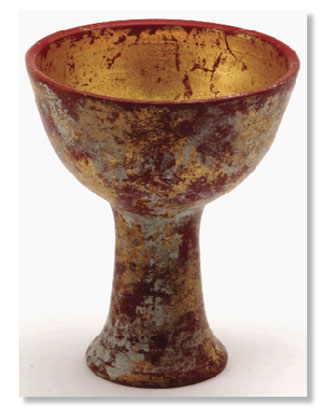
It's this one...
My mentor Bill had been telling me this along, but I never heard it; I wasn’t ready to hear it. I often wondered why he was willing to teach me his methods and share this indicator/system that he’d worked on for 15 years if it was the true holy grail. I mean, this guy has made a fortune trading and can work for about 3 hours a day and call it quits and made more money than most people will make in a week, yet was willing to give me the same tools he uses to be so successful. Then, I started remembering early conversations we had. He’d said that the system/tool is worthless without knowing how to use it and how to apply that system consistently on a daily basis and it doesn’t matter what it CAN do it only matters what it WILL do, and that’s completely in your hands. Now, I understand what he’s been telling me for months. I’m the holy grail. I’m what makes the tool work. The holy grail isn’t a system or a tool, it’s the knowledge—and more importantly—the ability to use that tool. So many people (myself included, until now) believe that the holy grail is out there and can be found and held in your hands; a tangible treasure that you can show off or share with others. That statement couldn't be further from the truth...

Suck it Trebek...
This is a very big development for me and understanding this fact puts me in a very select group of traders; the "outliers" as it were. No longer am I searching for the grail, spending months scouring and testing the thousands of systems and techniques that all claim to be the Chosen One. Now that I’ve found the holy grail, the difficulty is in unlocking the true potential of this gift and learning how to harness the true power of the tool and the person wielding the tool. Once that happens, there is no limit to how much I can do.
Tuesday, July 07, 2009
The importance of sticking to a plan
Note: This blog has transformed from a purely entertainment-oriented blog into a place for me to share aspects of my life that others may find boring, stupid or otherwise TMI for your taste. Part of my life that I'm trying to chronicle and share with others as an exercise in getting things off my chest and airing them to the world, possibly in a call for help or even just encouragement, is my newly found passion and career change: trading. So here's your first 100% trading post...hope you enjoy...if you're still reading...
So, I trade futures. I must spend 12-14 hours a day either trading or working on my setups, back-testing, coding strategies for the software I trade with and so forth. The point of all this time spent working on strategies and such? You create battle plans while not on the battlefield, then execute them when you go back out. Sounds simple, right? Wrong.
There's this disconnect from what you planned outside of the market and the execution of that plan while in the market and it is truly the most difficult aspect of trading. If not done properly, you can lose a lot of money really fast.
See, as a trader you look at yourself as a casino. You have an edge and over a large enough # of outcomes your edge will payoff, how much depends on how great you edge is. Well, the difficulty comes when you're trading a plan and you only trade 25% of the potential trades...and that's where I'm stuck: if you don't trade EVERY setup you're not going to properly execute the plan and realize the profits your edge should be yielding. Through fear, confusion and an assumption that you know what's going to happen, the execution of your plan is sabotaged by the very person who created it. I'm 100% convinced that the ONLY thing standing in the way of my becoming a successful trader is Bryan Mills.
How do you get around it? Well, you just sort of have to close your eyes and jump off the cliff, knowing that the parachute you packed is going to work. You eliminate yourself from the equation as much as humanly possible and basically become an emotionless, non-judgemental robot that reacts with no hesitation and complete faith in a system. The most difficult thing about that is knowing that you will fail some of the time and that failure is a requirement for success. How crazy is that? In order to succeed, you need to fail...and the human mind is quite incapable of easily grasping that concept, without some serious re-programming, or at least to the extent that I push it. I mean, there are certain days where I may only be 55% successful, yet turn a nice profit. Imagine if you coded software and 55% of the time the programs you coded worked...or making necklaces only 55% of the time that didn't fall apart...you get the idea.
Right now I feel like an addict going through rehab. I'm having to abandon the desire/need to be right and to be successful 100% of the time, and it's tough, but I can't achieve the level of success I want without letting go of the desire to be right.
So, that's where I am. Am I happy about it? Hell no! Is it something that gets better with each trade? You bet! It just takes practice and consistency and those are things that are a daily goal, no matter how difficult it may be...
So, I trade futures. I must spend 12-14 hours a day either trading or working on my setups, back-testing, coding strategies for the software I trade with and so forth. The point of all this time spent working on strategies and such? You create battle plans while not on the battlefield, then execute them when you go back out. Sounds simple, right? Wrong.
There's this disconnect from what you planned outside of the market and the execution of that plan while in the market and it is truly the most difficult aspect of trading. If not done properly, you can lose a lot of money really fast.
See, as a trader you look at yourself as a casino. You have an edge and over a large enough # of outcomes your edge will payoff, how much depends on how great you edge is. Well, the difficulty comes when you're trading a plan and you only trade 25% of the potential trades...and that's where I'm stuck: if you don't trade EVERY setup you're not going to properly execute the plan and realize the profits your edge should be yielding. Through fear, confusion and an assumption that you know what's going to happen, the execution of your plan is sabotaged by the very person who created it. I'm 100% convinced that the ONLY thing standing in the way of my becoming a successful trader is Bryan Mills.
How do you get around it? Well, you just sort of have to close your eyes and jump off the cliff, knowing that the parachute you packed is going to work. You eliminate yourself from the equation as much as humanly possible and basically become an emotionless, non-judgemental robot that reacts with no hesitation and complete faith in a system. The most difficult thing about that is knowing that you will fail some of the time and that failure is a requirement for success. How crazy is that? In order to succeed, you need to fail...and the human mind is quite incapable of easily grasping that concept, without some serious re-programming, or at least to the extent that I push it. I mean, there are certain days where I may only be 55% successful, yet turn a nice profit. Imagine if you coded software and 55% of the time the programs you coded worked...or making necklaces only 55% of the time that didn't fall apart...you get the idea.
Right now I feel like an addict going through rehab. I'm having to abandon the desire/need to be right and to be successful 100% of the time, and it's tough, but I can't achieve the level of success I want without letting go of the desire to be right.
So, that's where I am. Am I happy about it? Hell no! Is it something that gets better with each trade? You bet! It just takes practice and consistency and those are things that are a daily goal, no matter how difficult it may be...
Subscribe to:
Posts (Atom)